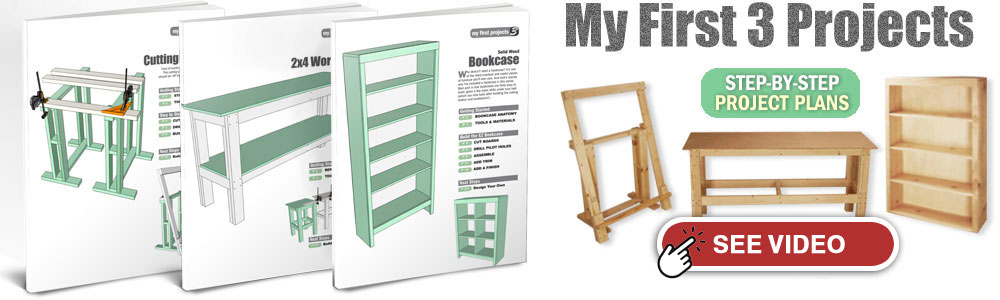
EZ Cutting Station |
EZ Workbench |
EZ Bookcase |
 |
|||
Put your work where it should be—off the floor and within easy reach! This is a must-have item for anyone wanting to get started in building wood projects. Best part is that you'll learn all the basic construction skills needed for building more projects! Buy Individual Plan: $4.95 |
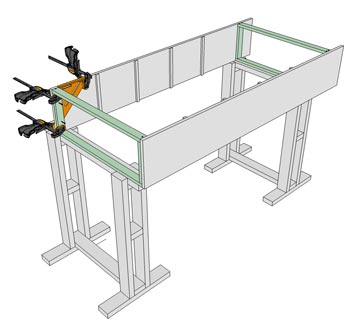
Unlike most workbench plans you'll find on the Web, my EZ Workbench lets you custom-design your bench in just about any size or shape you can imagine. That’s good news for those of us who have limited space to work in. Simple design uses 2x4s and plywood. Buy Individual Plan: $4.95 |
Who doesn't need a bookcase? Of course, that's the reason I decided to include this plan in my series My First Project. It's a perfect opportunity to put your basic building skills to work—and create a fantastic piece of furniture for your home or shop. Buy Individual Plan: $4.95 |
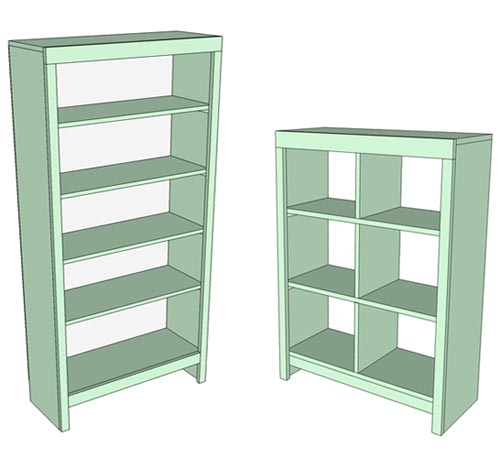
I've come to the conclusion that the best way to build a bookcase is probably not to buy a plan at all. At least that's my conclusion after a look around the Web for DIY projects. The problem was that I couldn't find a design that really fit what I was trying to do, or fit the unique space I had available to put in a bookcase. Not to mention that most plans were either to complex, or they required lots of expensive shop tools that I didn't have. So I decided to take a closer look at the basic construction of this kind of furniture, and develop an easy-to-follow guide for designing my own bookcase.
What eventually came from this exploration was a surprisingly simple set of plans —not so much the type of instructions that tell you exactly how long to cut this or that board, but instructions that first show you the construction really works. Once you understand how joinery holds furniture together (it's not as complicated as it sounds), suddenly your options for building a bookcase (or any project for that matter) are nearly endless.
I can't think of a better first-time woodworking project than a simple bookcase. I can always use another bookcase or bookshelf somewhere in the house, even if it ends up in my basement filled with tools. But the best part about building a bookcase is that it teaches you how to build just about anything from wood. Plus, I really like the fact that I don't have to buy expensive lumber to get started. That's good news for beginners, just in case things don't turn out as well as you like first time around. Just buy more wood and try it again. Once I got the hang of using the tools, I was a little more comfortable buying more expensive wood and materials, like cherry or maple hardwoods. For now, we'll just concentrate on getting some inexpensive wood from a home center and figure out how to make the pieces come together.
I know it seems like there's a lot of wood to pick from at a place like Home Depot or Lowes. But let's narrow our choices down a bit and just look at two options: plywood or solid pine.
Plywood is a good choice for bookcases and shelves because it doesn't warp as easily as solid-wood boards. That means I can usually go with longer shelves and maybe even thinner pieces of material (save $$) and still have the same strength as a smaller bookcase made of solid pine. Personally I don't especially like long shelves that are unsupported in the middle, so plywood doesn't really give me any benefit in that regard. However, plywood helps me avoid other problems that come with using solid boards, like expansion and contraction when the weather changes (see more about this below).
It's funny that before I got into this bookcase project, I probably wouldn't have considered using plywood. Mostly because I thought plywood was kind of a rough, down and dirty material - something that roofers nail down to the top of a house...and certainly not something for making furniture. Boy did I have a lot to learn. For now, just let me say that I've since made some really attractive pieces of furniture with plywood. Of course now I know where to look at Home Depot for the better quality grades of plywood. And believe me, you can spend just as much money on high-quality plywood as solid hardwood boards. So let's just keep in mind that plywood might very well be the better choice for building a bookcase. You'll have a pretty good idea which way to go after reading through all this.
Even with all the benefits of plywood, there’s still something I like about using solid wood lumber. Maybe that’s because all the antique furniture I like so much is made that way. Sure, the problems that come with solid wood construction are painfully obvious in 100-year furniture - wobbly legs, loose joints, open gaps between boards. But just think how amazing it is that solid-wood furniture can hold up as well as it does…for that long. The real culprit for solid wood construction is humidity…or rather, changes in humidity. Wood is like a sponge. It soaks up moisture during warm, humid summers and then gives it all back in winter when everything turns dry. It’s not really a matter of one environment being better or worse for wood. It’s the constant back and forth, season after season change that does the damage.
Of course, if I could figure out a way to keep a room consistent in temperature and humidity twelve months out of the year for the next 100 years I wouldn’t have to worry about any of this. Or I could be more practical and just be aware of what my solid wood projects will have to endure over the next few years, and maybe use a few construction techniques that will help keep the damage under control. That’s the more realistic approach, and one that woodworkers have been using for hundreds of years, long before plywood ever came around.
First we have to accept that solid wood is an unpredictable material. Aside from the moisture problems I talked about, solid wood is full of natural inconsistencies from one board to the next--thickness, grain, density, knots, twists, bends, warps--all unpredictable features in wood that I have to account for differently with each board I pull from the rack. And maybe that’s the reason woodworkers like solid wood so much…knowing that every project will always be unique in one way or another.
My reasons for using solid wood in a bookcase are probably not that warm and fuzzy. But I do understand and appreciate the quirky nature of wood, which helps me do a better job of planning and building projects. So, when I decide to use solid wood boards instead of plywood, here’s what I stop to think about before I get started.
Wood will always hold some amount of moisture, regardless of how wet or dry the weather is. Of course, a board is most wet the day it gets cut down in the forest. After that, boards go through a multitude of drying steps just to get the moisture level down low enough to ship to stores. However, that doesn’t necessarily mean the boards you bring home from Home Depot are ready to go. Ideally you want the moisture content in wood to be around 10-12 percent before you start cutting and gluing boards together. Problem is that most wood you pull off the rack at a home center is going to be at about 20 percent. So in a perfect world, you would let the wood dry for a couple weeks in your garage or basement to get the moisture content down.
What happens if you don’t? I’m sure plenty of people have built their bookcases the same day they brought home the wood. A little risky, though. The moisture content of fresh-bought wood will inevitably drop…sometimes from 20 percent to 10 percent…in just a few weeks. That’s definitely going to cause some shrinking. If you’re lucky, your wood joints will hold on and keep everything together. If you’re not so lucky, you’ll see some pretty unsightly gaps opening up around the joints. You’ll have to decide for yourself how much risk you want to take here.
It’s tempting to pull an 8-foot length of 1x12 of the rack and think that it’s ready to be cut up and glued together. Problem is that dimensional pine lumber is not always perfect for bookshelf plans. Length, width, and thickness can vary from one board to the next. That can be a problem when you start to assemble pieces together…they might not line up. So using solid wood boards (instead of plywood) means you’ll have to take a little more care in choosing boards off the rack…making sure you pick boards with as little warp, twist, and cupping as possible…and then double checking things like width and thickness before you start cutting and assembling pieces of your bookcase plans together.
Learning how to build a bookcase is the start of a journey - down a wonderful path of self satisfaction and accomplishment. You'll soon discover is that the skills you've picked up while building your bookcase can be applied to just about any kind of furniture project you can imagine. And the best part is that most projects can be built with only few common power tools and some inexpensive lumber from a home center. You'll find plenty of plans on the Web to show you step-by-step how to build a bookcase. And hopefully the particular design and style of the plan you buy will fit your taste.
However, I think a better approach is to design your own bookcase - something that fits exactly your taste, style, and the room in which you will set up the bookcase. I wouldn't normally suggest that everyone can design and build their own furniture projects - building furniture can get complicated (and expensive) if you don't have a lot of woodworking experience. A bookcase is different, though. It's the perfect project for learning the basics of wood construction - without having to invest a lot of money in tools and materials. My EZ bookcase plans shows you all the basics that go into building a bookcase - from choosing the right style of joinery to finding the best shelf length to avoid sagging shelves.
I've also included instructions for building a few simple shop tools that will make cutting lumber easy and accurate. Once you have the basics in hand, you'll be free to design and build a bookcase in any style, shape, or form you like.
There are plenty of choices on the Web for a nice bookcase design - but I'm really more interested in bookcase plans for the average DIY builder. Unlike most of the furniture around your home, a bookcase is one of the few things that just about anyone can build - without it looking like someone built it (if you catch my drift). I'm talking about a project that you can pull off with only a few power tools - and some easy-to-find pine lumber at your local Home Depot. Aside from the tools and lumber, what you'll need to dive into the world of bookcase design is a basic understanding of how cabinet joinery works. I'm not talking about anything complex - just a basic understanding of how to attach two boards together and keep them that way for some time to come.
Sometimes all that takes is a small strip of wood to hold a bookcase shelf up (that's called a cleat) or for the more adventuresome woodworkers, perhaps a dado and groove joint. Either way, my EZ Bookcase Planner lays out all the choices for you - the best kinds of joinery to use, the best kind of hardware, the best size of shelf for your custom bookcase design. You'll also learn how to put together a few handy shop jigs that make cutting lumber to size a breeze using an inexpensive circular saw. How to Build a Bookshelf I've always enjoyed showing people how to build a bookshelf - it's a perfect starter project for anyone just getting into building furniture for around the house.
I also like the fact that a bookshelf doesn't require a lot of expensive tools to build. I've built a variety of simple bookshelves and bookcases using only a circular saw and a power drill. And the best part was that I was able to buy everything I needed for the project at my local home imporovement center. Although someday you might want to build a nicer version of a bookshef, using hardwoods and perhaps some more sophisticated joinery - for now, a few boards of inexpensive pine will give you a very nice and functional bookcase or bookshelf without putting a lot of time or trouble into the project. Everyone has a different idea of what the perfect bookshelf is - and that's simply a matter of taste from one person to the next.
After looking at a lot of different bookshelf plans on the Web, I've decided that a better approach to the project is to let people design a bookcase that fits their own style and space. Of course, this means people will need a basic understanding of how all the pieces go together - and be comfortable with using a few basic tools to cut the wood to size. My EZ Bookcase Planner is designed for that very purpose. I've covered all the most common construction techniques that woodworkers use - with an inside look at the top three joinery styles that you'll find in bookcases and bookshelves today.
Building a bookshelf may be one of the most satisfying projects a first-time DIY builder can take on. It's not only a good way to get familiar using power tools - but the final product is something you can actually use around the house. What's more, the skills you'll pick up getting through your first bookcase plans project will come in handy for just about any wood projects you might want to tackle in the future. Let's go over some of the basic things you'll need to consider when building a shelf. Bookshelf Supports The most basic shelf is little more than a simple board held in place at both ends by hardware - or held in place by resting on another board for support. The simplest shelf design follows the later idea - the shelves simply rest on some type of support.
The support can be another board (cleat) mounted inside of a cabinet frame - much like what you'll find in a bookcase design. Shelves can also rest on pins - also mounted on the inside of a cabinet. Using pins means your shelf can be adjustable. Simply move the pins to change the height and position of your shelves. I'm not a big fan of bookshelf pins, mostly because I've never found a need to adjust my bookcase shelves after I've loaded them with books. My preference for bookshelf supports is to use cleats or rabbet and dado joinery. The primary difference here would be in the type of tools you own. Making shelves with cleats requires little more than a circular saw and a hand drill.
Making shelves with rabbets and dados requires a little more sophistication in the shop - along with some extra tools - like a router and a router cutting guide. I'm not sure that rabbets and dadoes do any better job of holding up books than a simple book shelf made with cleats - but they do make your bookshelf project more of a fine woodworking piece - something you might be proud to hand down to future generations.
If you've ever owned a cheap set of bookshelves, you've probably noticed that over time that a shelf will start to sag in the middle. All boards have their limit - and any amount of weight pushing down in the center of a board will test just how strong a shelf design is. Without the right kind of support - evenly distributed along the length of the board - a shelf will certainly begin to sag in the middle - books loaded or not. Of course, much of this depends on the type of wood you are using and the thickness of the board itself - as well as the length (or span) of the shelf. Fortunately some furniture designers have tested the limits for us - and have laid out some handy rule-of-thumb guidelines for just how long of a shelf we should build for a given type of wood and thickness. The simple set of templates and how-to guides show you what's needed in a basic bookcase design, but with enough flexibility that you can make the bookcase any size or style you like.
Designing fine furniture may be out of reach for most DIY builders - but a simple custom bookcase is the perfect project to try your hand at woodworking. What you'll discover is that the construction of a bookcase goes together fairly quick and easy - with only a few common power tools and some inexpensive lumber. You'll also appreciate that most bookcase plans gives you a variety of options in how you bring the boards together - from the most simple joinery using cleats and shelf supports - to custom building the shelves with dado and groove joinery.
The biggest challenge building your own custom bookcases is making sure the cabinet goes together true and square. What we're dealing with is a large box, essentially,- with lots of corners and intersections that can easily be out of square if we don't use a few precautions during assembly. I like to have my carpenter's square and level close at hand when assembling my custom bookcases, and I always do a tape measure check from corner to corner to make sure the numbers add up.
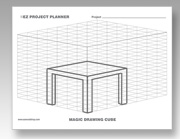
My EZ bookcase planner can help you brush up on the basics of bookcase construction - showing you up close how the shelf joinery works - as well as giving you several options for different joinery options. You decide which type of construction best fits your needs - and then use the how-to guides for completing the project. I've also included some handy printable graphs and templates to help you draw rough layouts for your custom bookcases design.
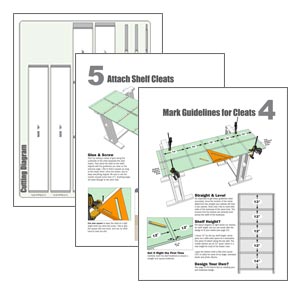
27-page PDF ebook includes easy, step-by-step plans for designing a simple bookcase with 1x12 lumber.